-
Getting Started on a Pool Installation
 If you’re considering a swimming pool installation near Salt Lake City , you have a lot of factors to consider. You can work closely with your pool contractor to determine whether you want a large or small pool, an outdoor or indoor swimming pool, and what water features and patio features you want. Here are some tips for getting started on your new pool installation.
Create a Pool Installation Budget
The first step in the pool installation process is creating an appropriate budget for your swimming pool services. You will have to consider the cost of the pool contractors and designers, the pool installation, any specialized water features that you want your pool to have, and your future pool maintenance. Developing a budget will make it easier for you to make the initial key decisions that your pool contractor will require of you. For instance, a small pool will cost less to build, install, and maintain than a large pool and hot tub installation.
Evaluate the Size, Shape, and Landscaping of Your Yard
Your swimming pool installation should fit seamlessly into your existing backyard design. You shouldn’t design a large, complex in-ground pool if you don’t have the space to support it. Instead, evaluate the size and shape of your yard, and consider your current landscaping. Talk to your pool contractor about the best size and type of swimming pool for your needs. It’s easy to get in over your head when beginning a swimming pool installation process and end up significantly reducing the size of the usable space in your backyard.
Consider Different Pool Types and Features
Once you decide on the size of your swimming pool installation, you can determine what type of swimming pool you want. Your swimming pool contractor can discuss the benefits of above ground and in-ground pools, fiberglass pools, vinyl pools, and concrete pools. You can also decide if you want water features, such as fountains, waterfalls, or pool slides. Finally, you can decide if you want patio features, like an outdoor kitchen, outdoor fire pit, or outdoor fireplace.
-
Fun Swimming Pool Facts
Next time you are lounging the pool area with your friends, it can be fun to impress them with pool and water feature trivia; if you memorize them well, you might even be able to impress your pool contractor in Salt Lake City . From the many health benefits that swimming offers to historical facts and statistics, there is plenty to know about swimming pools. Feel free to keep reading if you would like to pick up a few fun swimming pool facts that you can share with your friends and family.
Did you know that if you know how to swim, you are in the minority? More than half of people living in the United States do not possess this skill. This is unfortunate because swimming in a pool can serve as great exercise, working out your entire body and helping your lungs and heart grow stronger. Those who swim competitively will typically train for several hours every day, resulting in up to twelve miles’ worth of training in each session. If you stick to your training and strive to make it to the Olympics, you might swim in a pool that holds as much as 850,000 gallons of water.

-
How to Decide on a Swimming Pool Design
The decision to look into a new swimming pool installation serving Salt Lake City can be exciting, but there are also many factors to consider when deciding on a design. Many homeowners start by looking online or to their neighbors for inspiration. It also helps to step into your yard and visualize your dream lap pool. If you’re having trouble thinking of a design on your own, don’t hesitate to talk to a swimming pool company for help. Read on for an overview of how to decide on a swimming pool design.

Search for Inspiration
When it comes to choosing a swimming pool design, it can be difficult to start from scratch. This is why many homeowners start by looking for inspiration . You can search the Internet for different types of pool designs and even learn about the pros and cons of each option. You should also take note of any swimming pools that have caught your attention in the past. Consider talking to your friends and family members about their pools so you can find out what they have come to like or dislike about their designs. A new pool installation is a significant undertaking, so make sure you do your research and find a design you love.
Take a Look at Your Yard
Once you have some idea of what you would like your pool to look like, take a look at your space. You can only go as big as your property will allow, and certain pool designs may be better suited for your yard. Think about the features that are currently present in your yard and how they might affect your pool. It helps to make a visual outline of your ideal pool design using a flexible garden hose.
Work with the Pros
No matter how much research you have done, the professionals will know a bit more about pool design. You don’t necessarily have to have a concrete idea before talking to swimming pool builders, and they can typically help you if you are unsure about what type of design will work best for you.
-
The Importance of Balancing Your Pool Water
How To Balance Swimming Pool Water in Salt Lake City & More
Owning a pool in Salt Lake City, UT, offers a perfect escape from the summer heat. Nothing beats stepping into crystal clear, refreshing water right in your own backyard. However, maintaining that pristine condition requires more than just skimming leaves off the surface. You have to pay close attention to the invisible chemistry working behind the scenes. Knowing how to balance swimming pool water is the foundation of a clean, safe, and enjoyable swimming environment. When your chemical levels are aligned, the water looks great and feels comfortable on your skin. If things go out of whack, you might face cloudy water, algae blooms, or even damage to your expensive pool equipment. For homeowners in Salt Lake City and surrounding communities, keeping up with these maintenance tasks can sometimes feel overwhelming. That is where understanding the basics makes a huge difference. Deep Blue Pool and Spas is here to help you navigate the process. By learning exactly what goes into your pool’s chemistry, you can protect your investment and keep your family safe all season long.
What Is Pool Water Balance?
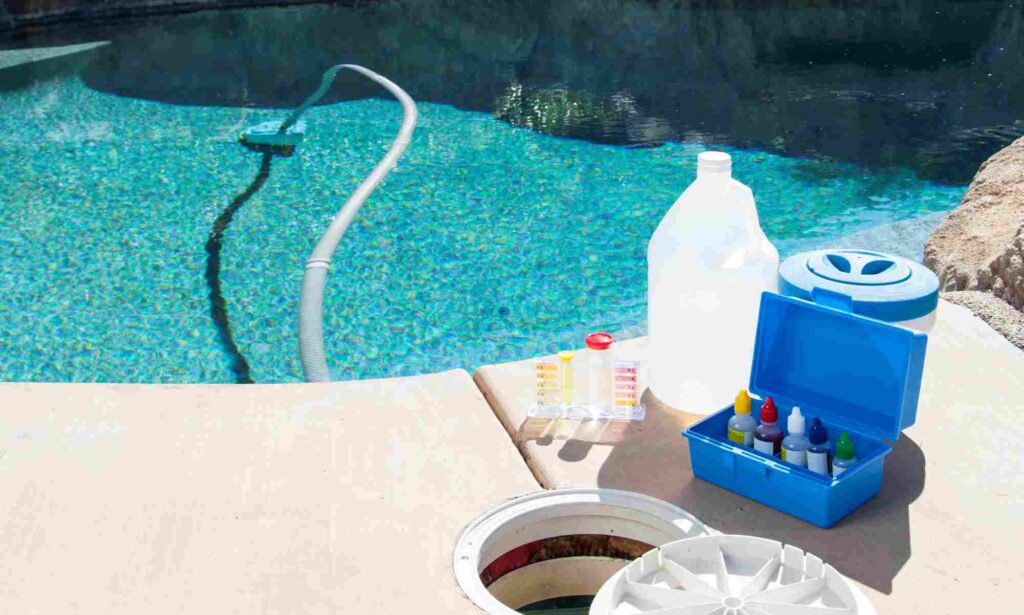
At its core, swimming pool water chemical balance refers to the delicate balance among several chemical factors in your pool. You are trying to create a neutral environment that is neither too acidic nor too basic. The three main components you need to monitor are pH, total alkalinity, and calcium hardness.
- pH Level: This measures how acidic or basic your water is on a scale of 0 to 14.
- Total Alkalinity: This acts as a buffer for your pH. It absorbs major changes before they can affect the pH level directly.
- Calcium Hardness: This measures the amount of dissolved calcium in the water.
When you get these three factors aligned perfectly with your sanitizers (like chlorine), you achieve true swimming pool water balance.
Why Balanced Pool Water Is Important
Maintaining proper pool water balance is crucial for several reasons that affect both the longevity of your pool and the safety of its users:
- Sanitizer Efficiency: Balanced water ensures that your sanitizer works effectively. If your pH is too high, chlorine loses its sanitizing power, leaving the water vulnerable to dangerous bacteria and algae.
- Equipment Protection: Proper balance protects your pool’s surfaces and equipment. Acidic water can corrode metal ladders, pumps, and heaters, while high calcium and alkalinity levels can cause scale deposits on tiles and within plumbing.
- Swimmer Comfort: The right chemistry ensures a pleasant experience for everyone. Imbalanced water is often the culprit behind red, stinging eyes, dry skin, and brittle hair.
Common Problems From Unbalanced Pool Water
When water chemistry drifts out of the optimal range, several visible and mechanical issues typically emerge. Here are some problems to look out for:
- Water Discoloration: You may notice the water turning cloudy or green, which is usually a sign of algae growth due to low chlorine levels.
- Scale Buildup: High pH and calcium levels can cause white, crusty deposits to form along the waterline as calcium separates from the water and adheres to surfaces.
- Mechanical Failure: If the water level drops below the skimmer intake, the pump pulls in air instead of water, disrupting circulation and preventing chemical mixing.
- Equipment Damage: The combination of low water levels and poor chemistry can lead to significant mechanical strain, potentially burning out the pump motor.
Tips to Maintain Proper Balance
Learning how to balance swimming pool water does not have to be a headache. You need to follow a consistent routine. Here are a few straightforward tips to keep things in check:
- Test the water regularly: Use a high-quality liquid test kit or test strips at least twice a week.
- Adjust alkalinity first: Because alkalinity acts as a buffer, you must bring it into the 80-120 ppm range before adjusting your pH.
- Correct the pH: Once alkalinity is set, aim for a pH level between 7.4 and 7.6. Add a pH increaser or decreaser as needed.
- Monitor calcium hardness: Keep this between 200 and 400 ppm to prevent scaling and corrosion.
- Watch your water levels: Make sure the water rests halfway up your skimmer hatch to ensure proper circulation. Knowing how to balance pool water also means maintaining a steady water volume.
Keep Your Salt Lake City Pool Pristine
Staying on top of your pool chemistry saves you money, time, and frustration. A well-maintained pool provides a beautiful oasis for your family to enjoy all summer long. If you live in Salt Lake City, UT, or the surrounding communities and need expert advice or professional maintenance, Deep Blue Pool and Spas has you covered. We can handle all your pool water balancing needs so you can spend less time testing and more time swimming. Reach out to our team today to schedule your next service.
Frequently Asked Questions
To help you navigate the essentials of water chemistry and equipment care, we have compiled a list of the most frequent questions our technicians receive from Salt Lake City homeowners. If you still have questions, contact us at Deep Blue Pool and Spas today.
How Often Should I Test My Pool Water?
You should test your pool water for pH and sanitizer levels at least twice a week during the active swimming season. You can test alkalinity and calcium hardness once a month.
What Is the Ideal Ph Level For a Pool?
The ideal pH range for swimming pools is 7.4-7.6. This perfectly matches the natural pH of human eyes and mucous membranes, preventing irritation.
Can I Swim If the Alkalinity Is High?
While you can technically swim in water with high alkalinity, it is not recommended. High alkalinity often results in a high pH, which can lead to skin irritation and cloudy water.
What Happens If the Pool Water Level Is Too Low?
If the water level drops below the skimmer, the pump will draw in air. This stops proper water circulation, prevents chemicals from distributing evenly, and can cause the pump motor to overheat and break.
Do I Need a Professional to Balance My Pool Water?
Many pool owners successfully manage their own chemistry. However, hiring a professional ensures perfect accuracy and saves you the hassle of handling strong pool chemicals.
RECENT POSTS
categories
- Uncategorized
- Hot Tub Installation
- Swimming Pool Installations
- Swimming Pool Design
- In Ground Pools
- Swimming Pool Maintenance
- Swimming Pool Service
- Swimming Pool Repair
- Outdoor Fireplace
- Outdoor Fire Pit
- Pool Safety
- Deep Blue Pools and Spas
- Exercise
- Swimming
- Outdoor Kitchen
- Pool Chemicals
- Chlorine Levels
- Water Feature
- Burning Calories
- Pool Contractor